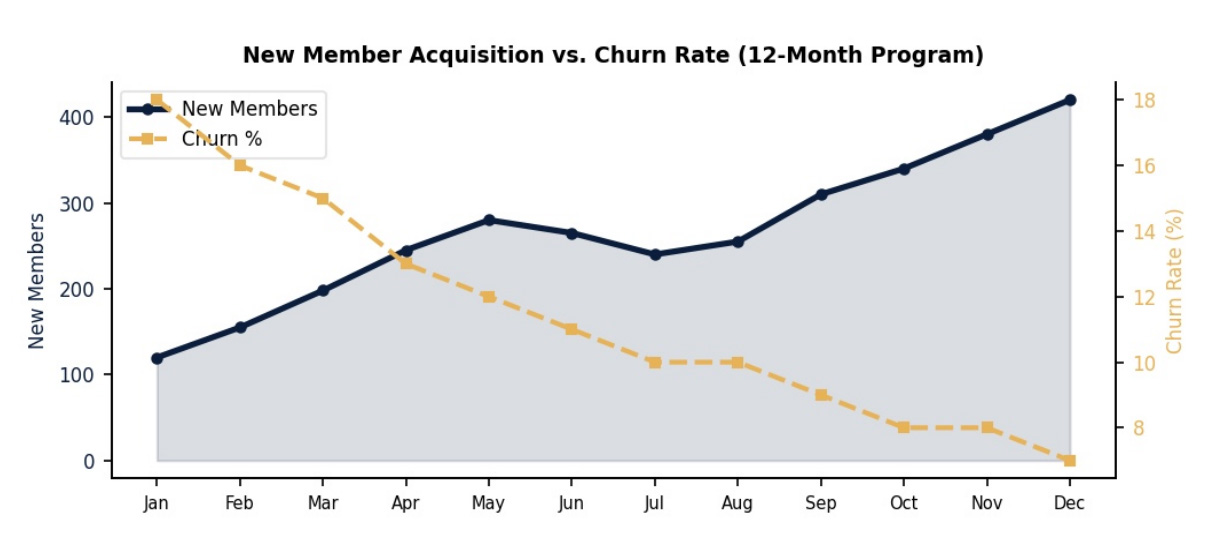
Membership organizations face a dual challenge: acquiring new members and retaining existing ones. Fenske Media engineers both sides of the equation. Our predictive churn models identify at-risk members 60-90 days before cancellation, while lookalike audience modeling drives new acquisition at scale.
A national fitness franchise reduced first-year member churn by 28% after implementing Fenske’s win-back mail sequence — saving over $1.2M in annual revenue that would have otherwise been lost.
“The win-back campaign alone paid for three years of our direct mail budget. The ROI math isn’t even close.”
— VP Marketing, National Fitness Brand
Fenske Media is a leading direct mail and print marketing company specializing in data-driven, personalized campaigns that deliver measurable results. By combining advanced audience targeting, behavioral data, and variable data printing, we help organizations reach the right customers with the right message at the right time. Our end-to-end capabilities span strategy, creative, production, and distribution, ensuring every campaign is executed with precision and optimized for performance. The result is more effective marketing, higher response rates, and stronger ROI across every channel we support.
Membership direct mail marketing uses customer data to identify at-risk members and deliver targeted messaging. This helps increase engagement, reduce cancellations, and strengthen long-term member relationships.
Win-back direct mail campaigns target former or inactive members with personalized offers to bring them back. These campaigns are highly effective for gyms, clubs, and subscription businesses looking to recover lost revenue.
Yes, churn reduction direct mail strategies focus on reaching members before they cancel. By using lifecycle marketing and predictive targeting, businesses can improve retention and increase customer lifetime value.
Direct mail helps membership organizations reach targeted audiences with compelling offers and clear value propositions. By focusing on specific demographics and geographic areas, businesses can attract new members who are more likely to convert.
Limited-time discounts, free trials, and exclusive perks are among the most effective membership direct mail offers. These incentives create urgency and encourage prospects to take immediate action.
Direct mail increases visibility by consistently placing your brand in front of potential members. Repeated exposure through targeted campaigns helps build familiarity and trust over time.
Yes, membership organizations can use direct mail to promote events, seasonal campaigns, and special promotions. These campaigns help drive attendance, engagement, and new sign-ups.
Membership direct mail campaigns use data such as demographics, location, income level, and lifestyle indicators to identify ideal prospects. This allows for more accurate targeting and better campaign performance.
Postcards, brochures, and oversized mailers are commonly used for membership marketing. These formats provide enough space to highlight benefits, showcase offers, and clearly communicate value.
Direct mail works alongside digital channels like email and social media to reinforce messaging. This multi-channel approach increases touchpoints and improves overall campaign effectiveness.
Membership organizations need a steady flow of new members to grow without relying only on digital ads or referrals. Direct mail campaigns help target high-value prospects using demographic, geographic, and behavioral data, then deliver a personalized offer directly to the household. For gyms, clubs, associations, and subscription programs, this can include free trials, limited-time promotions, event invitations, or new member incentives. Strong membership direct mail marketing gives prospects a tangible reason to respond and helps attract members who are more likely to engage long term.
Reducing churn is one of the fastest ways to improve revenue for membership-based businesses. Direct mail for member retention allows organizations to identify at-risk members and re-engage them before cancellation. Campaigns can be built around renewal windows, declining activity, missed visits, expiring benefits, or other behavioral triggers. Instead of waiting until a member leaves, direct mail creates a proactive touchpoint that reinforces value, encourages action, and keeps the relationship active. This makes churn reduction direct mail especially valuable for gyms, clubs, associations, and subscription programs.
Win-back direct mail campaigns are designed to bring former or inactive members back after they have lapsed, canceled, or stopped engaging. Because these audiences already know the brand, the message can focus on reminding them what they valued, showing what has improved, and giving them a clear reason to return. Personalized offers, deadline-based incentives, and segmented messaging can help recover revenue that would otherwise be lost. For membership organizations, win-back campaigns are often one of the most efficient ways to reactivate demand and increase lifetime value.
Lifecycle marketing direct mail supports members at every stage of the relationship, from onboarding and engagement to renewal, upgrade, and reactivation. Instead of sending the same message to every member, lifecycle campaigns use data to match the message to the member’s current status. A new member may receive a welcome mailer, while a long-term member may receive an upgrade offer, referral incentive, or renewal reminder. This creates a more relevant experience, strengthens loyalty, and helps membership organizations improve retention, satisfaction, and long-term revenue.
The strongest membership campaigns are built around data, not broad messaging. Fenske can use audience insights, behavior patterns, engagement history, and predictive modeling to help membership organizations decide who should receive each campaign and when. That means current members, at-risk members, inactive members, and high-value prospects can each receive messaging that fits their stage in the journey. This level of personalization helps direct mail feel more relevant, improves response rates, and supports smarter decisions around acquisition, retention, and reactivation.